Chandragupta Maurya's Wife: Durdhara and the "Helena" Story
Chandragupta Maurya is linked to two wives in history and tradition: Durdhara, who Jain tradition says was the mother of his son Bindusara, and a Greek princess from the family of Seleucus I Nicator, who is popularly called Helena. The name Helena does not appear in any ancient source.
Quick answer
| Durdhara | Named in Jain tradition as his queen and the mother of Bindusara |
|---|---|
| The Seleucid princess | Part of a marriage agreement in the treaty with Seleucus I Nicator, c. 303 BCE |
| Was her name Helena? | Not according to ancient sources. "Helena" is a modern popular name, made famous by books and TV serials |
| Nandini | A character created for the Star Plus serial Chandra Nandni, not a historical figure in the main sources |
| Son | Bindusara, who became the second Maurya emperor |
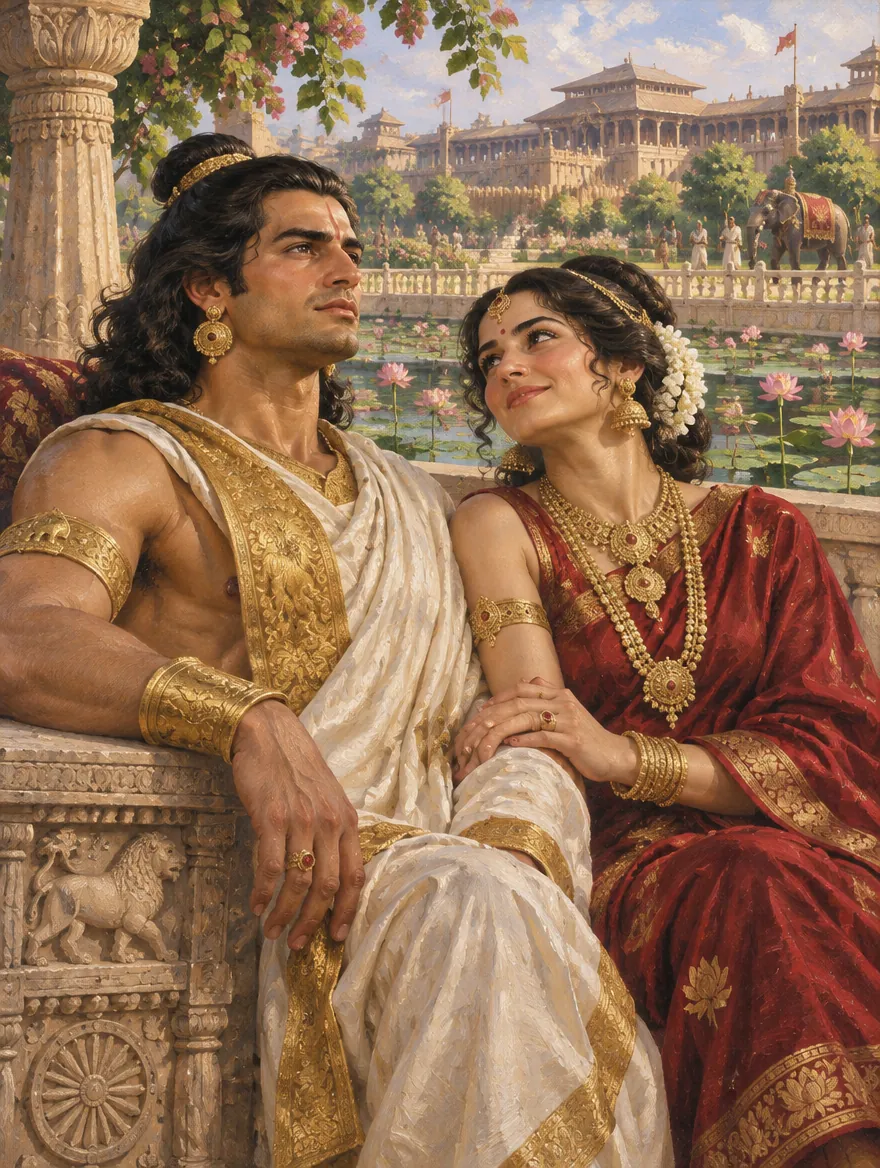
Durdhara: the queen in Jain tradition
The main source for Durdhara is the Jain text Parishishtaparvan, written by the scholar Hemachandra in the 12th century CE, more than 1,400 years after Chandragupta's time. According to this tradition, Chanakya fed Chandragupta tiny amounts of poison over time so that he would become immune to assassination attempts.
The story says Durdhara, who was pregnant, accidentally ate food meant for the king and died. Chanakya saved the unborn child, and a drop of poison left a mark (bindu) on the baby's head, which is how the child got the name Bindusara. This is a legend, not a verified record, but it is the best-known account of Chandragupta's marriage.
The Greek princess popularly called Helena
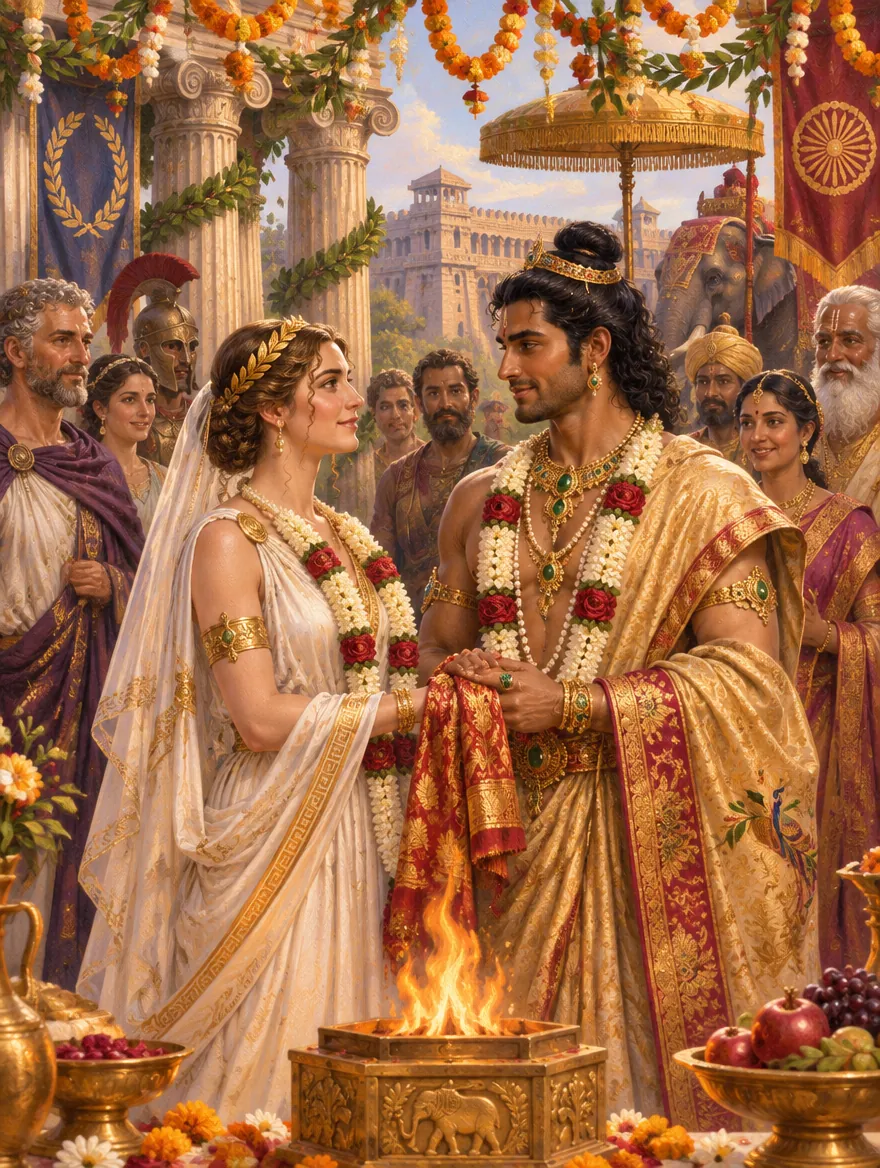
Around 305 BCE, Seleucus I Nicator, one of Alexander the Great's generals, crossed into India to reclaim Alexander's eastern provinces. The war ended in a treaty around 303 BCE. Seleucus gave up territories in present-day Afghanistan and Baluchistan, and Chandragupta gave him 500 war elephants.
The ancient geographer Strabo and the historian Appian say the treaty also included a marriage alliance. Strabo uses the Greek word epigamia, a marriage agreement. Many historians read this as a marriage between Chandragupta (or his family) and a Seleucid princess. Others think it may have been a broader right of intermarriage between Greeks and Indians.
What about Nandini?
The 2016 Star Plus serial Chandra Nandni built its story around a romance between Chandragupta and Nandini, a princess of the Nanda dynasty. Some later folk traditions mention a Nanda princess, but she does not appear in the main historical sources. Our serials guide covers how each show portrays his wives.
How many wives did Chandragupta Maurya have?
History can only reasonably point to two: Durdhara in Jain tradition, and the Seleucid bride from the treaty. Serials add others for drama. Ancient Indian kings often had several wives, so he may have had more, but no reliable source lists them.
Frequently asked questions
Who was the wife of Chandragupta Maurya?
Jain tradition names Durdhara as his queen and the mother of his son Bindusara. He is also linked to a Greek princess from the family of Seleucus I Nicator through a treaty around 303 BCE.
Was Helena the wife of Chandragupta Maurya?
A Seleucid princess probably married into the Maurya family as part of the treaty with Seleucus, but the name Helena does not appear in any ancient source. It is a later popular name.
Whose daughter was Helena?
In popular tradition she is the daughter of Seleucus I Nicator, Alexander the Great's general. Ancient sources mention a marriage agreement but do not name the bride.
Who was the mother of Bindusara?
According to the Jain text Parishishtaparvan, Bindusara's mother was Durdhara.
Was Nandini a real wife of Chandragupta Maurya?
Nandini is mainly a character from the TV serial Chandra Nandni. She is not found in the main historical sources.
Follow the Chandragupta Maurya film news
Aditya Dhar is reportedly developing a historical epic on Chandragupta Maurya. Nothing is confirmed yet. We track every credible update in one place.
See the film trackerSources
- Strabo, Geography 15.2.9 and Appian, Syriaca 55 (on the Seleucus treaty)
- Hemachandra, Parishishtaparvan (Jain tradition on Durdhara and Bindusara)
- Wikipedia: Seleucid–Mauryan war
- Wikipedia: Durdhara